


Services Used
The Challenge
Buying the akiya was the easy part. Marc closed on a traditional house in Sakurai, Nara — a quiet residential area in Japan's Kansai region — and immediately stepped into a system designed around the assumption that property owners are in the country. Japan expects foreign property owners to appoint a tax representative (納税管理人) — a domestic point of contact who can receive official notices, respond to the tax office, and ensure obligations are met on local timelines. Without one, correspondence from the municipal tax office has nowhere to go, and deadlines pass in silence. Beyond the regulatory reality, the property itself had a septic tank (浄化槽) requiring a mandatory maintenance inspection before legal occupancy, three disconnected utilities that each needed to be activated in Japanese through local providers, and a boiler (給湯器) the previous owner had removed entirely — something never disclosed during the purchase. Every one of these problems required Japanese-language communication, coordination between multiple vendors, and someone registered domestically to act. From Australia, Marc had none of these — and no clear path to meeting Japan's expectations for property ownership from abroad.
The Solution
MailMate became Marc's operational backbone in Japan — a registered domestic address, a bilingual team acting on his behalf, and a single coordination layer between every vendor, utility provider, and government office the property touched.
A compliance deadline met before the lights were on. The property's septic tank required a licensed maintenance inspection before it could be legally occupied — but the inspection itself required running water and electricity, neither of which had been connected. MailMate identified the dependency, contacted both utility providers, and accelerated the activation timeline by two weeks to ensure the inspection could proceed on schedule. The team then coordinated directly with the Nara Prefectural Environmental Conservation Association to confirm the inspection window and manage all follow-up correspondence — keeping the property on track for legal occupancy without the owner making a single call.
An undisclosed property issue, caught and resolved. When MailMate contacted the local gas provider to activate propane service, the company reported that the boiler (給湯器) had been physically removed — something never disclosed during the purchase. There was no hot water infrastructure at all. Rather than simply relaying the problem, MailMate managed the full resolution: sourcing replacement quotes, presenting options to the owner, coordinating on-site access for installation, and handling the gas company's required cash deposit on inspection day. What could have stalled the property for weeks was resolved end-to-end from a single point of contact.
Tax compliance, handled from filing to payment. Japan's real estate acquisition tax (不動産取得税) arrives on an unpredictable timeline — anywhere from two to six months after purchase — and the notice comes entirely in Japanese. MailMate proactively contacted the Sakurai tax office, spoke with the officer in charge, and confirmed the scheduled mailing date so nothing arrived without warning. When the form came in, MailMate completed the filing and submitted it on the owner's behalf, with phone confirmation accepted as the official submission. When the annual fixed asset tax bill (固定資産税) followed, MailMate reviewed the amount, explained it, and processed payment — ensuring the property remained fully compliant with Japanese tax obligations without the owner needing to interpret a single document.
Consolidated billing across every vendor. Electricity, water, propane gas, septic tank maintenance, boiler installation — each vendor in Japan expects its own payment method, typically bank transfer or konbini slip, and none of them accept foreign cards. Without a Japanese bank account, the owner had no way to pay. MailMate consolidated every obligation into a single billing relationship, giving the owner one transparent view of all property costs. When a vendor accidentally double-charged a bill, the MailMate team caught the discrepancy, flagged it, and processed the reversal — the kind of financial oversight that protects owners who can't read the invoices themselves.
The Results
- Brought a fully disconnected property to operational status — water, electricity, and propane gas activated across three separate Japanese vendors without the owner making a single phone call
- Uncovered an undisclosed property defect and managed the full resolution — from sourcing boiler replacement quotes to coordinating on-site installation and payment
- Accelerated utility activation by two weeks to meet a mandatory septic tank inspection deadline, keeping the property on track for legal occupancy
- Ensured full tax compliance from abroad — filed the real estate acquisition tax, confirmed submission directly with the Sakurai tax office, and processed the annual fixed asset tax payment
- Provided ongoing financial oversight by catching and reversing a duplicate vendor charge before the owner was aware of it
- Established a permanent domestic address of record in Japan — all property correspondence now arrives, gets scanned, translated, and surfaced in the owner's dashboard from 9,000 km away
Own property in Japan but live abroad?
See how MailMate handles tax notices, utility setup, septic inspections, and everything in between — so you don't have to be in Japan to run your property. Book a 15-minute walkthrough.
Book a walkthrough →Meet Marc
From dream purchase to operational nightmare — and back.
Like many foreign akiya buyers, Marc found the property online, fell in love with the price and the neighborhood, and closed the deal relatively quickly. What nobody prepares you for is what happens after the purchase: the stack of Japanese-only correspondence, the utility vendors who don't have English-language support, the tax forms that arrive months later with deadlines buried in kanji, and the property-specific surprises — like a septic system that needs a licensed inspection or a boiler that simply isn't there anymore.
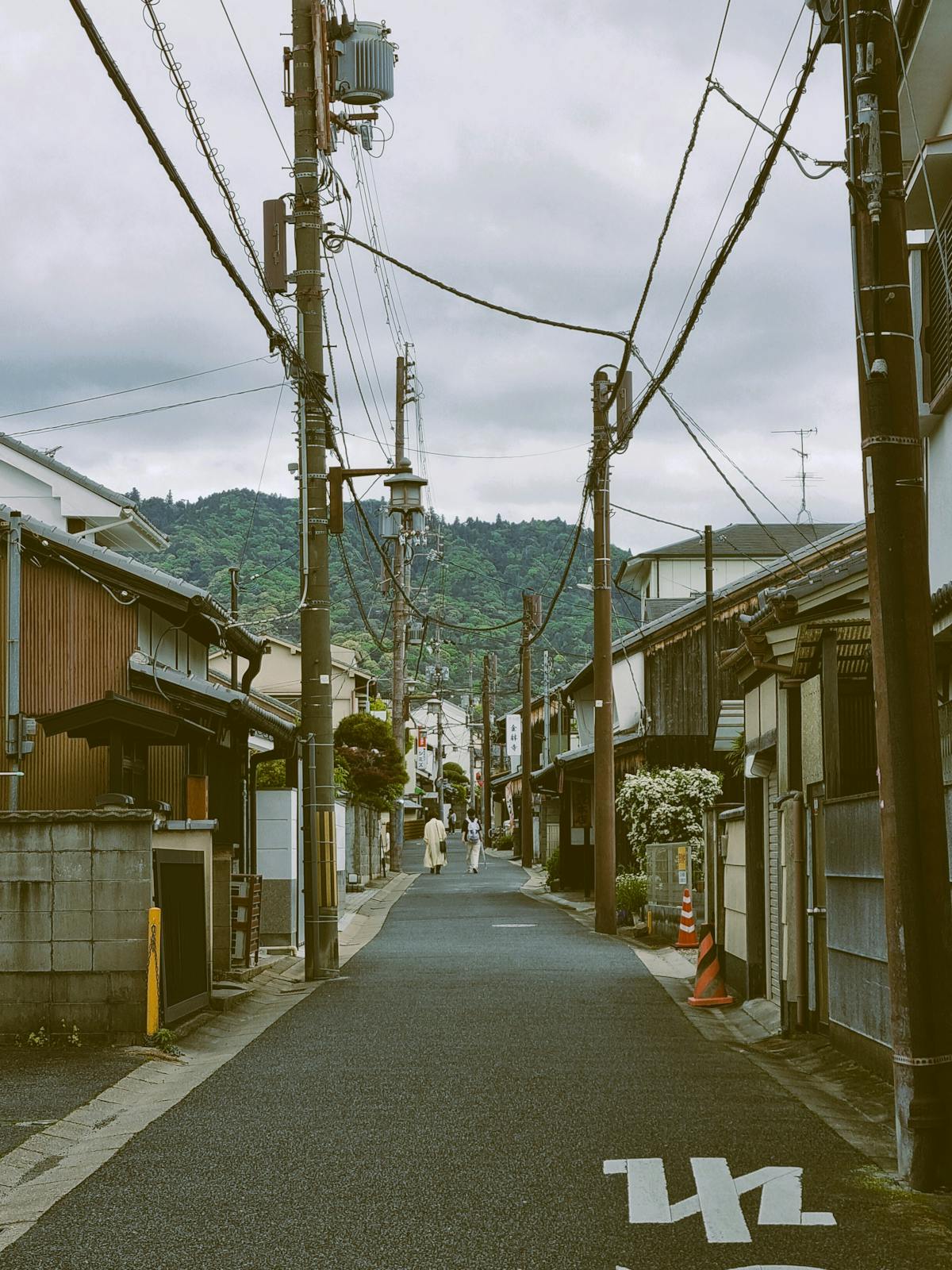
Marc had no plans to relocate to Japan full-time. The property in Sakurai — a residential area in Nara Prefecture, south of Osaka — was a long-term hold: a place to visit, eventually renovate, and possibly rent. But running it remotely meant someone in Japan needed to receive the mail, talk to the vendors, pay the bills, and navigate the bureaucracy. MailMate became that someone.
Within weeks of onboarding, the MailMate team had coordinated with five separate Japanese entities — the Sakurai tax office, the water bureau, the electricity provider, a propane gas shop, and a septic tank inspection company — resolved an undisclosed property issue, and established Marc's Japanese address of record. The property now runs from a dashboard and an inbox, 9,000 kilometers from Nara.